
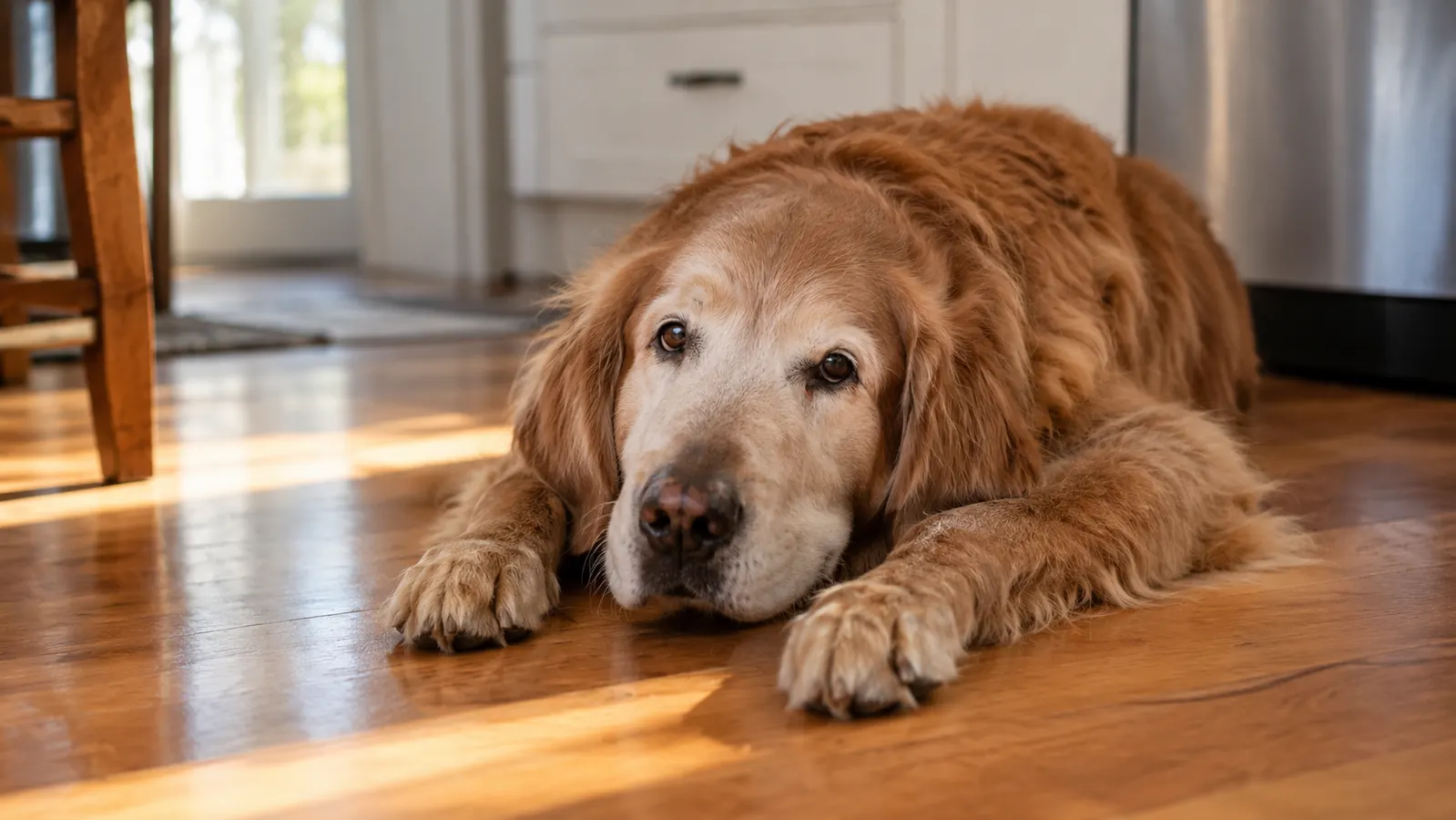
Juno turned eleven this spring, and for the last year or so I have been watching her think about getting up. She is a yellow Lab, about 74 pounds, and every morning she lies on the kitchen floor and looks at me like she is working up the nerve. Her back legs are stiff. The three steps off the back porch have become a negotiation. The car ride to the vet is fine once she is in, but the getting in part takes a minute now. I am a retired dental hygienist, so I read labels the way I used to read charts, and I had been giving her a joint supplement on and off for about two years. Cosequin first, then Zesty Paws. They were both fine. Then I moved her up to Dasuquin, tried a cheaper chew for a few months in the middle, and went back. I think Dasuquin was the right call.
This is not a story about a cure. I do not believe in those, and my vet, Dr. Patel, does not sell them either. When I asked whether a joint supplement was worth trying, she said it was reasonable, as long as I kept Juno lean and kept her moving. That is the part nobody wants to hear, so I will say it early: a supplement is not a substitute for a walk. Juno still walks most mornings, up to about a mile and a half, slower in winter. The supplement is the part that makes the walk feel like a good idea instead of a chore.
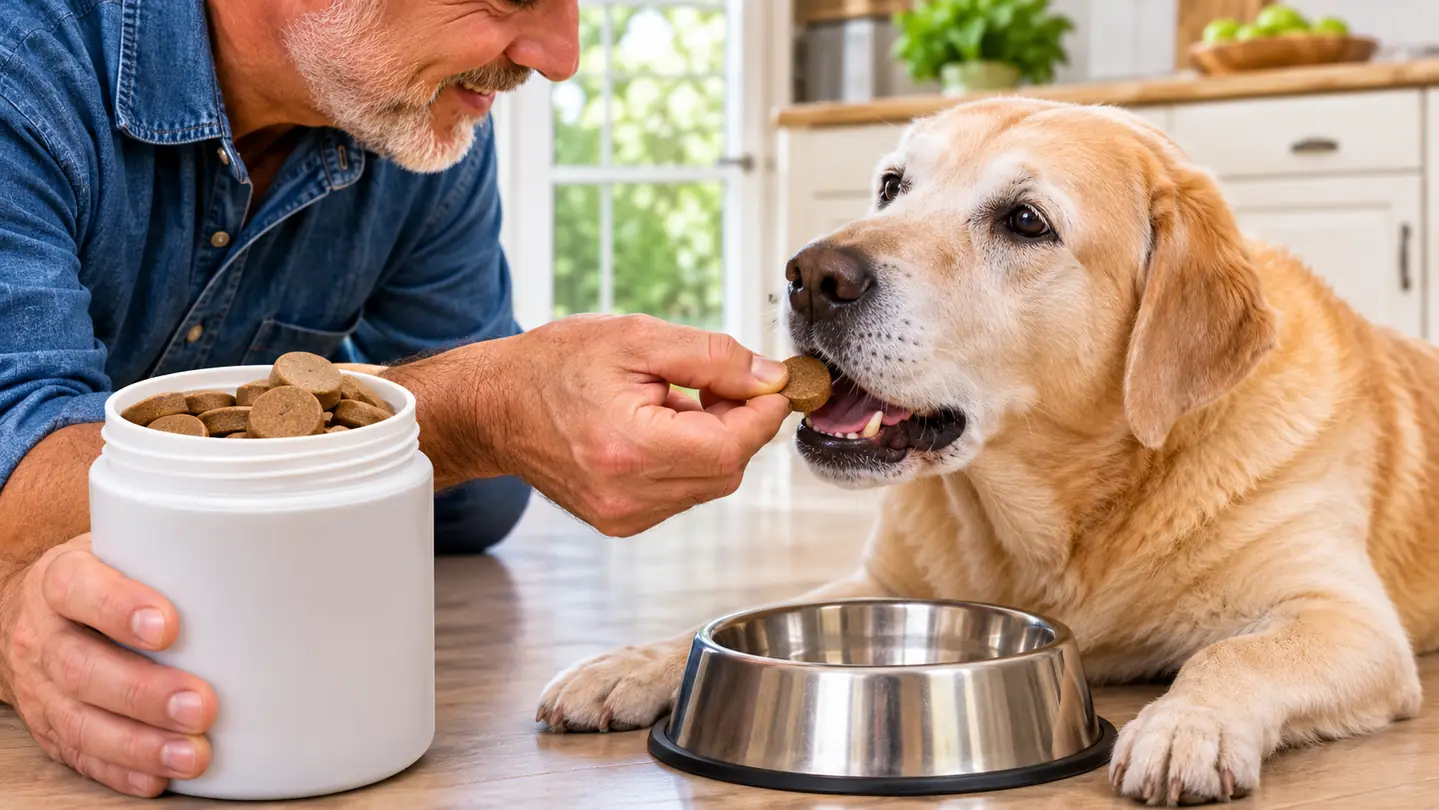
Why did I move her up to Dasuquin? Because the label says it is the step up. Cosequin has glucosamine hydrochloride, chondroitin sulfate, and MSM. Dasuquin has those, plus ASU, which is avocado soybean unsaponifiables, an ingredient I had been reading about for a while. Dasuquin is made by Nutramax, the same company as Cosequin, and it is formulated for dogs 60 pounds and up. Juno qualifies. It is also the priciest of the five products I have tried, and I will be honest that I hesitated on that for a month before I bought it.
The morning routine is simple. I crumble the chewable tablet over her breakfast or offer it like a treat. She thinks it is a treat, which makes my life easier. The label says to follow the directions on the package, and I follow them for her weight, with Dr. Patel's okay. I also pour a little Nordic Naturals Omega-3 liquid on her food most mornings, because it supports her skin and coat and overall comfort. One joint chew at a time, plus the fish oil. That has been my rule for two years.
The change was not dramatic. It was the kind of change you notice on a Tuesday morning when the dog gets up the first time you ask.
The step up my Lab finally got
Six months in, easier mornings and fewer pauses at the porch steps. Dasuquin is the pricier choice, and for my 74-pound Lab it has been the one that made sense.
Amazon Check Today's Price on Amazon →The first few weeks, I noticed nothing. That is normal, and I want to say it plainly because the internet will tell you otherwise. Joint supplements work gradually, over weeks, not days. I kept giving it to her anyway, because the bottle says to, and because Dr. Patel said to give it a fair chance. Sometime around the second month, I realized I had stopped bracing myself when I called her in from the porch. She was still slow, but she was not hesitating the way she used to. She would come to the top of the steps, pause, and then come down. Before Dasuquin, that pause sometimes turned into a sit-down and a long look back at the door.

The car is where I noticed it most. Juno used to stand at the open door of the SUV with her front feet on the seat and her back feet planted, waiting for me to lift. Now she hops in about half the time on her own. The other half, she still needs a hand on her rump. That is not magic either, but it is a real change, and it is the kind of thing you only catch if you are paying attention. I keep a little notebook in the kitchen drawer, and I jot down the mornings when she gets up without a groan. There are more of them now than there were in August.
I want to be fair about the downsides, because every review has cons and this one should too. The tablets are bigger than the Cosequin ones, so I crumble them, and crumbled Dasuquin does not always disappear into the kibble. Sometimes I find a crumb on the floor that Juno has decided she is done with. The price is the other con, and it is a real one. I tried GlycoFlex for three months as a cheaper alternative, and it was fine. But I kept coming back to the same question: if I am going to give her a joint supplement anyway, why not give her the one with ASU and the full label? That is a question only you and your vet can answer for your dog.
What I'd Tell You If We Were Sitting at My Kitchen Table
If you were sitting at my kitchen table with a cup of coffee, here is what I would tell you. Ask your vet first. That is not a disclaimer, it is the whole conversation. Your vet knows your dog's weight, your dog's history, and your dog's particular stiffness. Then, if your vet says a joint supplement is reasonable, start with the label that matches your dog's size and read the milligrams. Dasuquin is made for dogs 60 pounds and up, and it is the step up from Cosequin because it adds ASU. It is pricier, and you have to decide whether that is worth it. For Juno, it has been. Six months in, she gets up a little easier, she hesitates a little less at the steps, and she still walks with me most mornings. That is the whole story. No cure, no running like a puppy, just a slower dog having a slightly easier time being a dog. That is what I wanted when I moved her up to Dasuquin, and that is what I got.
Give the step up a fair chance
Give it eight weeks before you judge it, follow the label for your dog's weight, and keep the walks going. If your vet says it is reasonable, Dasuquin is the one I would start with.
Amazon Check Today's Price on Amazon →