

Juno is an 11-year-old yellow Lab, about 74 pounds, and last winter I watched her do the same slow shuffle I suspect you're watching right now. She'd lie on the kitchen floor, and when it was time to get up, she'd rock forward once, then again, then plant her front feet and heave. The back legs were always the last to cooperate. Mornings were the worst. She'd stand there a second with her hind end still half-down, looking at me like she was apologizing for taking so long. The three back-porch steps got the same treatment: pause, breathe, then one careful step at a time.
Her vet, Dr. Patel, said what she says to every owner of an older Lab: keep her lean, keep her moving, and a joint supplement was a reasonable thing to try. So I tried Cosequin first. It's made by Nutramax, it's the brand you'll see on the counter at our clinic, and it's the number one vet recommended retail joint health supplement brand. Two years later, after trying a few other things, I still keep a tub of it in the pantry as a fallback. This is the routine I wish someone had walked me through the first time.
Start with the joint supplement our vet said was reasonable to try
Cosequin chewable tablets from Nutramax were the first joint supplement I gave Juno, and the one I still keep on hand. Follow the label for your dog's weight and check with your vet before you start anything new.
Amazon Check Today's Price on Amazon →Why I Started With Cosequin
I read labels the way some people read the sports page. When I compared joint supplements for Juno, I looked at the active ingredients first. Cosequin lists glucosamine hydrochloride and sodium chondroitin sulfate, plus MSM. Those three are the ones I kept seeing in the products our vet's clinic stocked, and Cosequin was the one the clinic counter actually carried.
The other thing that mattered to me was trust. Nutramax has been making pet supplements for over 25 years, and Cosequin's own label calls it the number one vet recommended retail joint health supplement brand. I'm not the kind of person who takes a label's word for anything, but when our own vet's office stocks it, that carries more weight than any slogan.

The Routine That Helped Juno
None of this is complicated, and none of it happened fast. It was five small steps, done the same way most days, for weeks at a time. If your dog is stiff in the back legs, here's the order I'd do it in.
Step 1: Talk to Your Vet Before You Change Anything
Before I put anything in Juno's bowl, I called Dr. Patel's office. I'm not a veterinarian and I don't play one on the internet. Every dog is different, and a supplement that helps one dog might not suit another, especially if there's an underlying condition you don't know about. A quick call is free, and it gives you a steady place to start.
Ask what your vet thinks about joint supplements for your dog's age and weight, whether there's any reason to avoid them, and how long you should give one before deciding it isn't helping. Dr. Patel suggested keeping Juno lean and moving, and said Cosequin was reasonable to try. That was enough for me. I didn't need a promise, just permission to try something sensible.
Weigh your dog first, honestly. Juno is 74 pounds, and the directions on the label are based on weight. The scale at the vet's office gives you a real number to work from. Follow the label for your dog's weight, and check with your vet if you're unsure. Guessing at the dose is the one way to get this wrong.
Step 2: Pick One Supplement and Give It a Fair Chance
I gave Juno one joint supplement at a time, never two at once. Cosequin was her first. The tablets are small, and I found they crumbled easily over her breakfast. Some dogs will eat them right out of your hand. Juno would eat almost anything, so I usually crumbled hers over her kibble and stirred it in so she didn't eat around it.
The active ingredients are glucosamine hydrochloride and sodium chondroitin sulfate, plus MSM. I'm not a chemist, but after two years of reading pet supplement labels, those are the names I recognize and look for. Nutramax has been making pet supplements for over 25 years, and Cosequin is the number one vet recommended retail joint health supplement brand. That's why I trusted it as a starting point.
Write down the day you start. I didn't at first, and later I wished I had. A note on the calendar is enough. You're looking for changes over weeks, not days, and a start date keeps you honest about whether it's working. I also wrote down how she moved on the first morning, so I had something to compare it to later.
Step 3: Give It Time and Stay Consistent
Joint supplements work slowly, and Cosequin was no exception. I noticed nothing in the first week. By the third week, Juno was getting up from the kitchen floor with one rock forward instead of two or three. That's the kind of modest change you're hoping for, not a sudden turnaround. If you expect a different dog in a week, you'll be disappointed and quit too soon.
Consistency matters more than anything. I gave it every day, same time, with breakfast, so I couldn't forget it. When I traveled, I packed the tub. Missing a day here and there isn't a disaster, but a routine is what gives a supplement a fair chance to do its job. Cosequin is a chewable tablet, which made it easy to fold into a habit that was already there.
Keep your expectations honest. Cosequin supports joint health; it doesn't undo years of wear. For Juno it meant easier mornings and less hesitation at the three back-porch steps. That was worth it to me, and it's the change I'd watch for in your dog too. Modest and gradual is the goal, and it's a good one.
Step 4: Keep Her Moving, Even When It's Slow
A supplement does its best work alongside movement. Juno still walks most mornings, up to about a mile and a half, slower in winter. I let her set the pace. Some days that's a brisk loop around the block, and some days it's a slow wander to the corner and back. Either way, she moves, and moving is what keeps those back legs working.
The three back-porch steps are the hardest part of her day. I learned to wait and not rush her. Sometimes she takes a breath at the bottom before she commits. I never lift her unless she's truly stuck, because using the legs keeps them stronger. A slow dog is still a dog using her muscles, and that's the point.
Hardwood floors are slippery for stiff back legs. I put down runners in the hallway and a mat by the kitchen door so she has traction where she needs it most. Little changes like that made a bigger difference than I expected, and they cost almost nothing. If your dog lives on wood floors, do this before you even order the supplement.
Step 5: Watch the Small Signs That Tell You It's Working
The signs are small. She gets up on the first try more often. She doesn't hesitate as long at the porch steps. She gets into the car with one hop instead of two. None of these are dramatic, but they're real, and they're what I watched for. I kept a mental list, and every time one of those small moments happened, I noted it.
I also watched for anything that worried me. If a supplement upsets her stomach or she stops eating, that's a reason to stop and call the vet. I never saw that with Cosequin, but I'd want to know the signs before I started. Knowing what to watch for made me calmer about the whole experiment.
After about eight months, I moved Juno to a step-up product from the same company, on the vet's okay, and I've kept a tub of Cosequin in the pantry as a fallback ever since. It's a good place to start, and it's the one I'd reach for again. Not because it's fancy, but because it's dependable, and dependable is what you want at 6 a.m. with a stiff dog waiting at the kitchen door.
What Else Helps
The joint supplement was only part of Juno's routine. Every morning, for about a year now, I've poured unflavored liquid fish oil over her food, by the label. It's not a joint chew and it doesn't do what Cosequin does, but it supports her skin, coat, and overall comfort, and the two have worked well side by side. I add it after the kibble so it doesn't pool at the bottom of the bowl.
Keeping her lean matters just as much. Extra weight is extra load on stiff joints, so Juno eats a measured amount and gets whatever treats I count into her daily total. Dr. Patel said it plainly: lean and moving beats heavy and resting, every time. That single piece of advice has done more for her comfort than any bottle or tub I've bought.
The other thing that helped was warming her up before walks. I'd let her stand on the porch for a minute, stretch her front legs, and take those three steps down slowly. A slow start to the walk, then a normal pace once she loosened up. It sounds small, but it made the whole walk easier, and it's free.
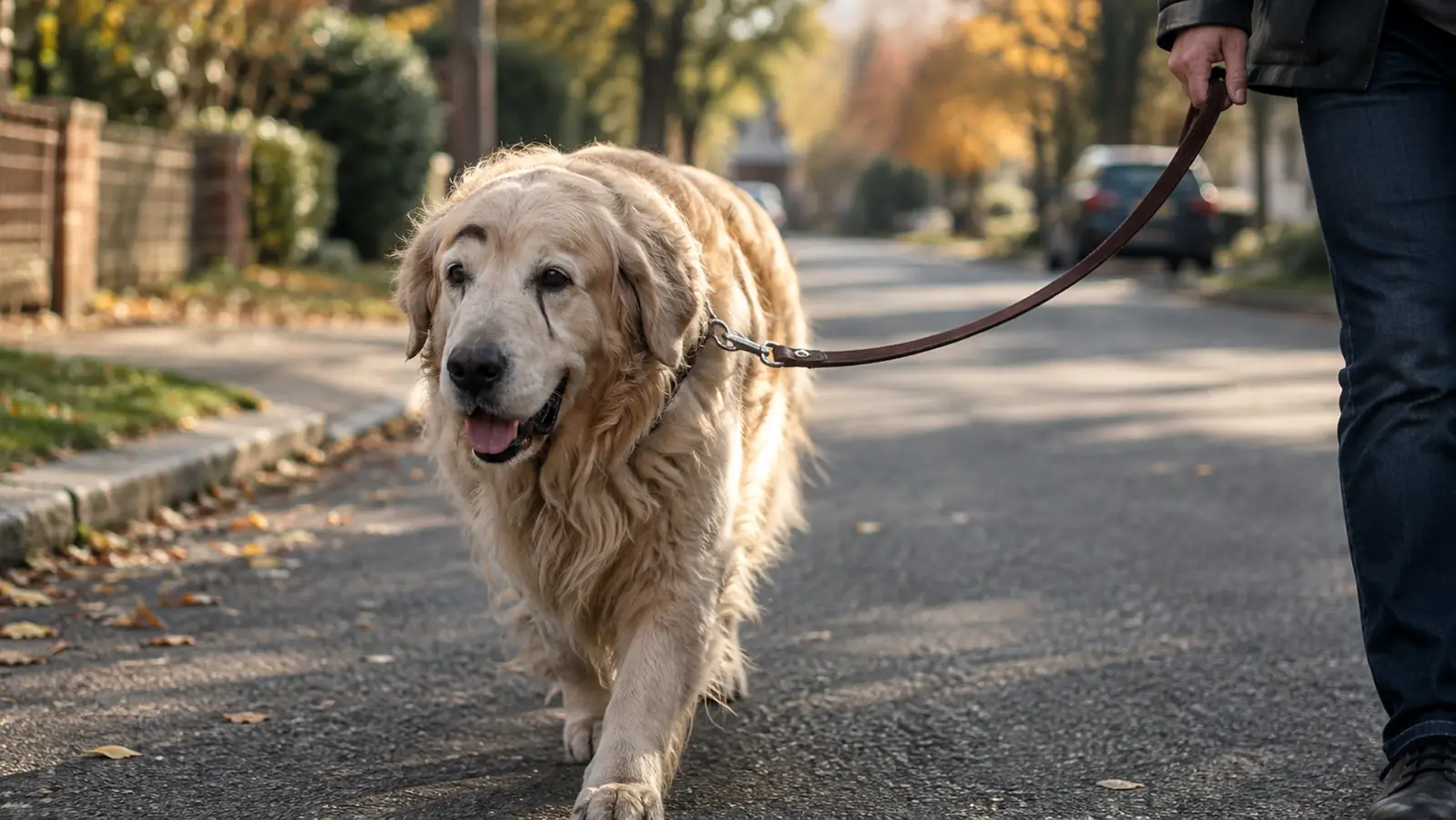
By the third week, Juno was getting up from the kitchen floor with one rock forward instead of two or three. That's the kind of change you're hoping for.
When to Reassess
If you don't see any change after a couple of months, that's a conversation for your vet, not a reason to give up on supplements entirely. There are other products out there, and I've tried several. Cosequin is where I'd start, but it's not the only answer. The goal is a dog who gets up easier and moves more comfortably, and there's more than one road to that. Give the first product a real chance before you switch, and change one thing at a time so you know what's actually helping.
What I'd Tell a Neighbor Over the Fence
I'd say start with Cosequin, give it a solid six to eight weeks, and keep everything else steady while you do. Don't change her food, her exercise, or her routine all at once, or you won't know what's helping. And check with your vet first. That's the whole thing, and it isn't complicated. Most of what helped Juno was patience and a calendar.
If your dog is stiff in the back legs, you already know the feeling of watching her hesitate at the bottom of the steps. You don't need a lecture, you need a place to start. Cosequin was that place for us, and it's the first thing I'd hand a friend who asked. It won't fix everything, but it's a reasonable, vet-approved first step, and sometimes that's exactly what you need.
Try Cosequin first, the way we did
It's the supplement I reached for first and the one I still keep in the pantry. Follow the label for your dog's weight, check with your vet, and give it a few honest weeks before you judge it.
Amazon Check Today's Price on Amazon →