
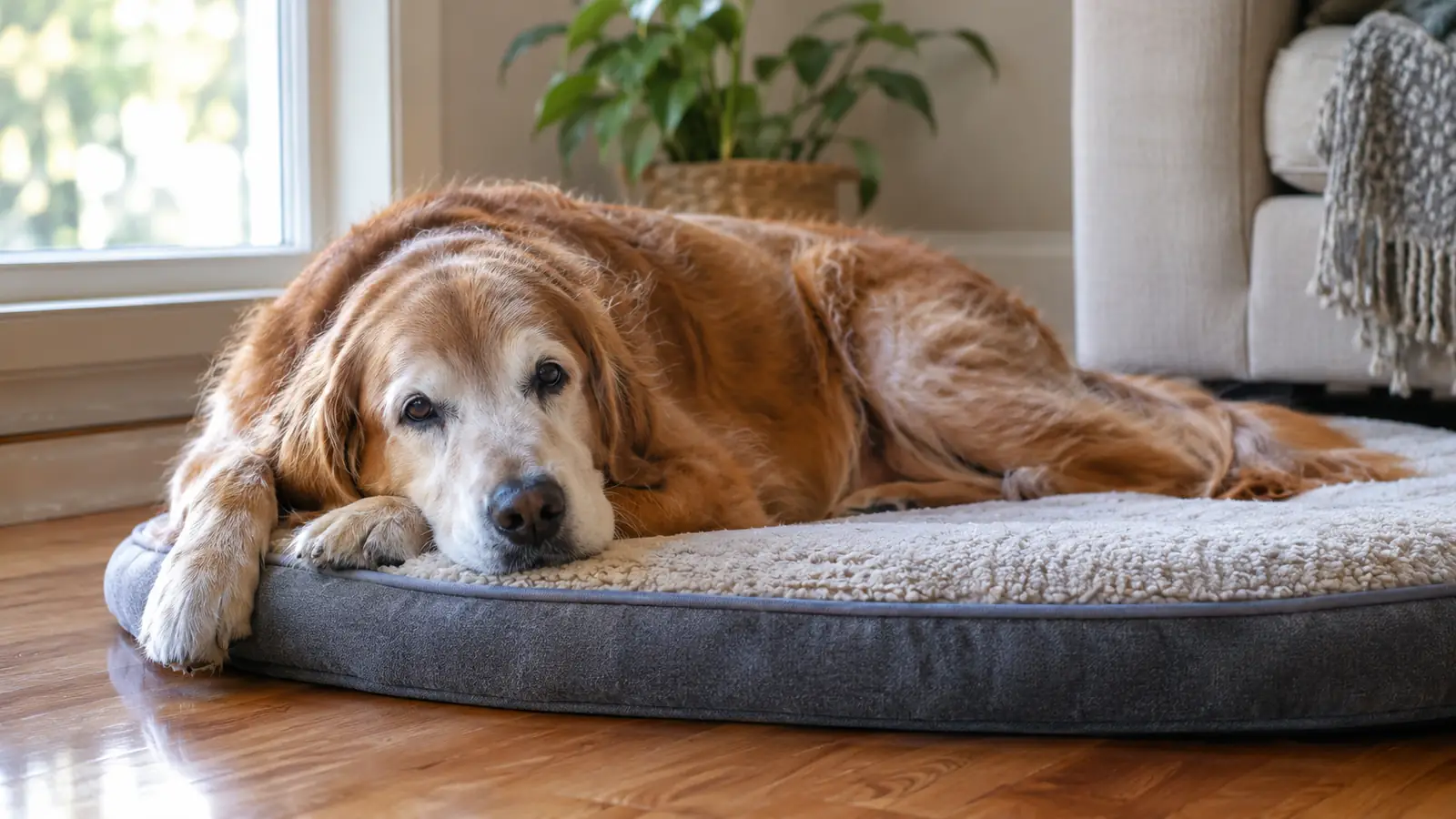
Juno's morning used to start with a problem. She would lie on the kitchen floor, look at me, and then take a long moment to gather herself before her back legs did their part. At eleven years old and about 74 pounds, she is a big yellow Lab, and big dogs carry a lot of weight on those rear hips. She still gets up, but it is slower than it used to be. She hesitates at the three back-porch steps, and she pauses at the bumper of my mid-size SUV before she decides whether the jump is worth it. Our vet, Dr. Patel, said the plan should be to keep her lean and keep her moving, and that a joint supplement was a reasonable thing to try. After some trial and error, we landed on Dasuquin for Large Dogs. Six months in, I can tell you exactly how we use it, what I would do differently, and what I would not bother with.
This is not a quick fix in a bottle, and I am not going to tell you that a chewable tablet erased every stiff moment. What I can tell you is what the process looked like, from the vet visit to the daily routine, so you have a realistic picture before you spend money on anything. I had already tried a couple of things on my own before that first call, and I wish I had started with Dr. Patel instead.
The chewable tablet we settled on for a 74-pound Lab
Dasuquin for Large Dogs is made for dogs 60 pounds and up, and it is the joint supplement we use after a check-in with Dr. Patel. See today's price on Amazon and decide if it fits your dog's routine.
Amazon Check Today's Price on Amazon →Step 1: Talk to your vet before you order anything
I understand the urge to just buy something. Juno's hips were stiff, I felt helpless, and a supplement felt like the one thing I could control. But the right first step is a phone call. Dr. Patel knows Juno's history, her weight, and the way she moves, and she can tell you whether a supplement is reasonable for your dog or whether something else is going on. In our case, she suggested we keep Juno lean and keep her moving, and she gave the go-ahead to try a joint supplement. That conversation shaped everything we did after. That phone call took ten minutes and saved me from guessing.
Bring a few details to the appointment or the phone call: your dog's current weight, their age, and a description of what you are seeing at home. I brought Juno's exact weight from our last visit, 74 pounds, so there was no guessing. For us it was the slow get-up, the hesitation at the steps, and the pause before jumping into the car. Write it down. It helps the vet hear a pattern instead of a vague 'she seems stiff.' You will also have a baseline, which matters later when you are trying to decide if anything changed.
Ask about the product itself while you are there. Dr. Patel is familiar with the Nutramax line, and she was fine with us trying Dasuquin for Large Dogs because Juno is over 60 pounds. If your vet has a different recommendation, listen to them. A supplement is support, not a substitute for a vet's advice, and the last thing you want is to start a routine your vet would not have picked.
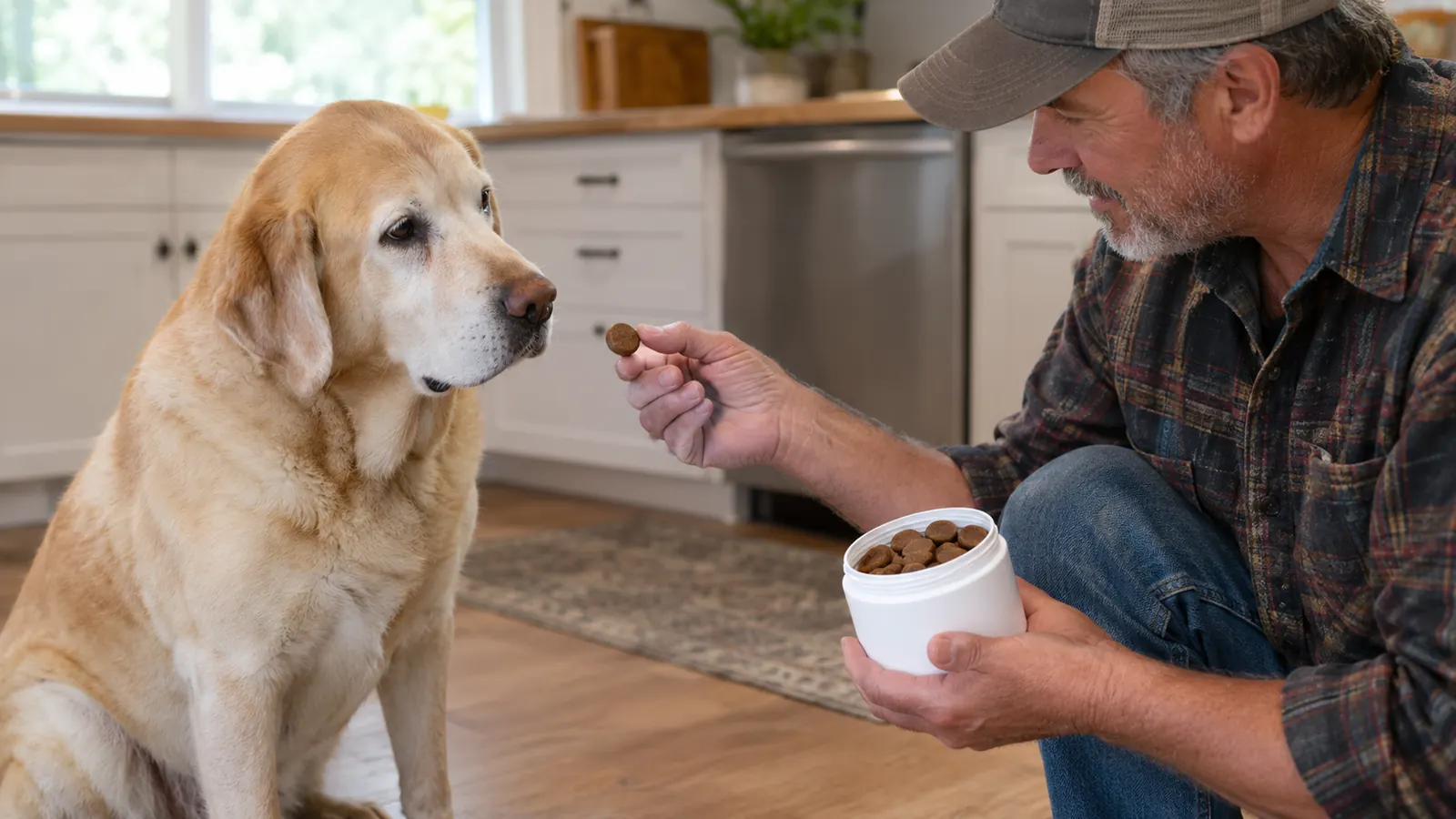
Step 2: Choose the large-dog formula and read the label
There are a lot of joint supplements on the shelf, and the difference is not just the brand. Dasuquin for Large Dogs is specifically made for dogs 60 pounds and up. Juno is about 74 pounds, so the large-dog formula is the one that fits her. The label lists glucosamine for dogs, plus chondroitin and ASU, and it comes as a chewable tablet. The listing is a pack of two 150-count tubs, and the information on the package is per pack, which is worth knowing before you stock up. The label also notes that Dasuquin is the #1 veterinarian recommended joint health supplement brand. The package dimensions are 6.3 by 3.11 by 3.07 inches, so the tub does not take much room in the cabinet.
I read labels the way I used to read patient charts. I want to know what is in the product, how it is given, and what the directions say. The directions on this one say to follow the package for full administration instructions, so that is what we do. I do not guess at the amount, and I do not double up because I think more is better. If the label says to check with your vet for your dog's weight, that is exactly what you should do.
One thing I will tell you plainly: Dasuquin is pricier than some of the alternatives we tried. I do not mind paying for something that fits Juno's size, but you do not need to buy the biggest option on day one. Start with what the label directs for your dog's weight, see how the routine fits your household, and talk to your vet before you make it a long-term habit. That conversation also gave me permission to stop second-guessing the choice.
Step 3: Give it the same way, at the same time, every day
Consistency matters more than the exact time of day, but we found a routine that sticks. Juno gets her chewable tablet with her evening meal, after her walk, when she is calm and hungry. The dose comes from the label, checked against her weight and confirmed with Dr. Patel. The habit part is on you. A supplement only works if it actually gets into the dog, day after day, for weeks. Same time of day, same place, same hand. I set a phone reminder for the first two weeks until it became automatic.
Juno takes the tablet easily. It is a chewable, so I do not have to hide it in peanut butter the way I did with some powders. I offer it right before her bowl goes down, and she chews it like it is part of the meal. If your dog is picky, ask your vet about crumbling it over food or offering it as a treat. The goal is a routine you can keep for months, because this is a slow game.
Store the tub somewhere your dog cannot reach, and keep an eye on the package so you know when you are running low. We learned that the hard way with an empty bottle on a Sunday. The pack of two meant we had a spare, which is a small thing until the day you reach for the tub and it is not there. A little planning saves a skipped dose.

Step 4: Pair the supplement with the things that actually move the needle
A supplement does its best work when the rest of the picture is in place. Dr. Patel said it plainly: keep Juno lean and keep her moving. So the tablet is not the whole plan. Juno walks most mornings, up to about a mile and a half, and we go slower in winter when the cold makes everything stiffer. The walks are not heroic. They are steady, and they keep her joints moving without wearing her out. Even ten minutes of slow walking on a flat sidewalk counts. On the days we skip the walk, I notice the difference the next morning.
The house needed small changes too. We have hardwood floors, which are slippery for an older dog, so I put down runners and a mat where she likes to lie. The three back-porch steps are easier when I slow down and let her set the pace instead of hurrying her. At the car, I open the hatch and give her a moment. She still needs help thinking the jump through, and that is okay. Small changes, done consistently, are still changes.
We also pour a measured dose of unflavored fish oil on her food every morning. It is not a joint chew, and I never ran two joint chews at once. The fish oil supports her skin, coat, and overall comfort while the Dasuquin does its own job. If you are already giving your dog something, talk to your vet before stacking another product on top. More is not automatically better.
Step 5: Watch for gradual changes and keep a simple log
The honest timeline is weeks, not days. I did not see a change overnight, and I would not trust any product that promised one. What I noticed first was the mornings. Juno used to lie on the kitchen floor and take a long moment to organize her back legs. Somewhere around the third or fourth week on Dasuquin, she started getting up on the first try more often. It was not dramatic. It was just easier.
I keep a small notebook. I write the date, whether she hesitated at the porch steps, whether she needed a boost at the car, and how the walk went. I also jot down anything unusual, like a day she is extra stiff or extra perky. It sounds fussy, but it kept me honest. When you see a dog every day, the changes are easy to miss. The notebook showed me a pattern of easier mornings and less hesitation, which is exactly the modest result Dr. Patel said to expect from a joint supplement.
If you notice anything concerning, a new limp, a change in appetite, or a day where your dog will not put weight on a leg, that is a vet call, not a supplement decision. The notebook helps there too, because you can tell the vet exactly when things changed. We have not needed that call yet, but I like knowing the record is there. The goal is not a perfect record. The goal is a record that tells you whether the routine is worth keeping.
What Else Helps
Dasuquin is the product we use, but it is one part of a longer list. Keeping Juno's weight where the vet wants it is the biggest thing, because every extra pound on a large dog is extra load on the hips. Movement matters too, and it does not have to be heroic. Our morning walks, slow and steady, keep her moving without wearing her out. And the small house changes, the runners on the hardwood, the patience at the steps, they all add up. None of it is complicated, and none of it is expensive. It is just consistent. That is the whole list, and it has been enough.
I would also say this: give the routine time and keep your expectations reasonable. A joint supplement supports joints and comfort. It does not turn an eleven-year-old dog into a puppy. Six months in, Juno still hesitates at the back-porch steps on cold mornings. But she gets up from the kitchen floor on the first try most days, and that is a real improvement from where we started. I would rather tell you the modest truth than oversell it, because you deserve to know what you are signing up for. If you are just starting out, that is the expectation I would set.
Six months in, Juno still hesitates at the back-porch steps on cold mornings, but she gets up from the kitchen floor on the first try most days.
Talk to your vet, then check today's price
If your large dog is over 60 pounds and your vet gives the okay, Dasuquin for Large Dogs is the chewable tablet we have used for six months. It is pricier than some options, but it fits Juno's size and our routine. Check today's price on Amazon and see if it makes sense for your dog.
Amazon Check Today's Price on Amazon →