
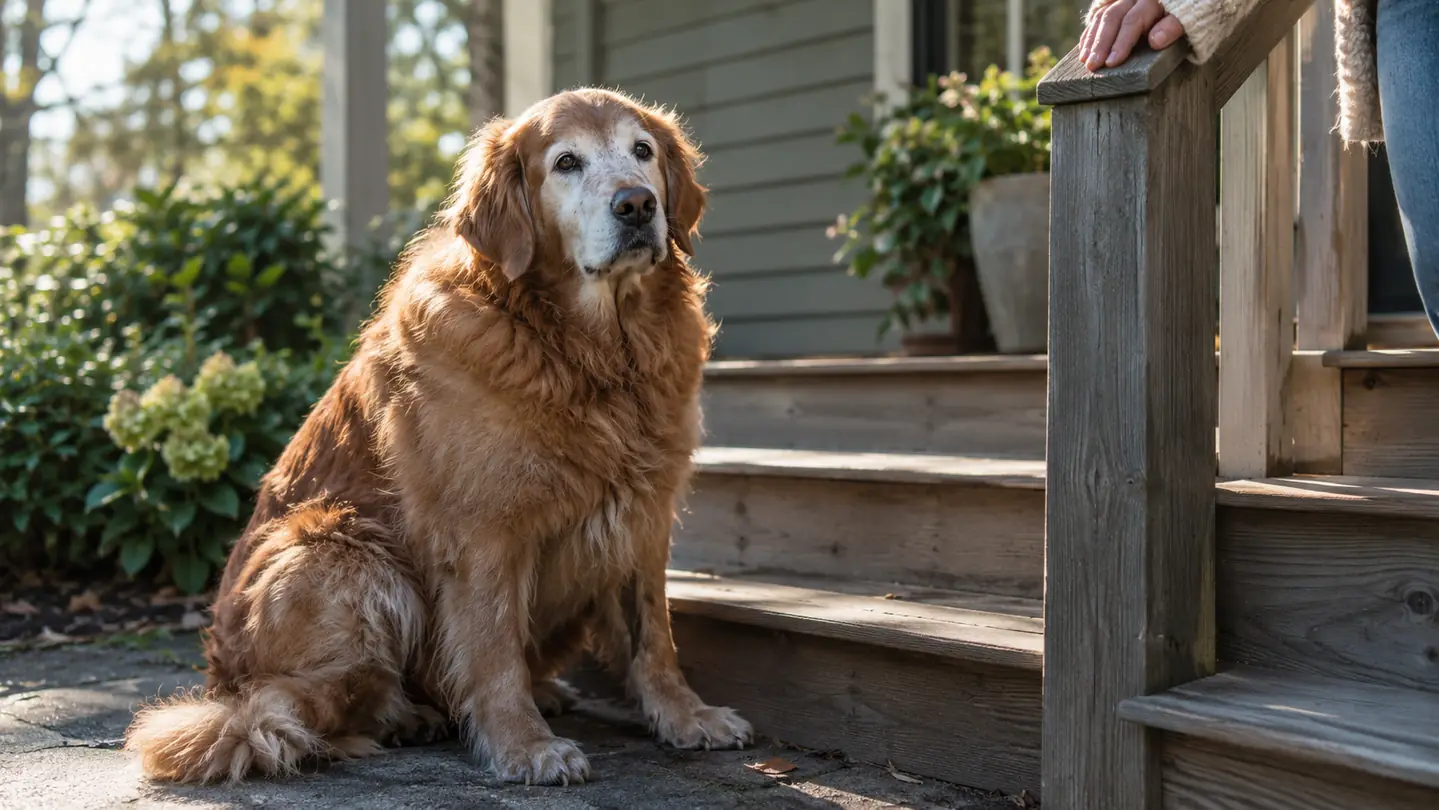
The first time Juno stopped at the bottom of the back-porch steps, I figured she was being stubborn. She is an 11-year-old yellow Lab, about 74 pounds, and she has always had opinions about when she wants to move. But when it happened three mornings in a row, I stopped calling it stubbornness. Her back legs were stiff. Getting up off the kitchen floor took longer every week, and the three steps up to the porch had turned into a wall she would rather sit in front of than climb. The car was the same story. Anything that asked her back legs to do real work was getting harder.
Our vet, Dr. Patel, said the same thing I had been reading: keep her lean, keep her moving, and if we wanted to try a joint supplement, that was a reasonable thing to do. So we did. For the last few months, Juno has been on VetriScience GlycoFlex, and I have built the rest of our routine around the same idea. This is the step-by-step version of what we do, from the vet visit to the towel trick at the stairs. It is not a cure for anything, and I would never tell you it is. It is a way to support a big, aging dog's comfort and mobility while you work on the stairs together.
The Chew That's Part of Our Stair Routine
VetriScience GlycoFlex is the chicken-flavored soft chew Juno has been on for the last few months. It combines glucosamine, MSM, and green-lipped mussel in a formula with 10 active ingredients, and it is certified by the National Animal Supplement Council. Follow the label for your dog's weight and check with your vet before starting.
Amazon Check Today's Price on Amazon →The Plan We Followed
What follows is the order we do things in, and the order matters. The vet visit came first, then the house changes, then the supplement, then the walks, and finally the hands-on help at the steps. Each piece made the next piece easier. If you only do one thing, do the vet visit. If you only do two, add the grip on the stairs. The rest builds on that.
Step 1: Ask Your Vet Before You Change Anything
I know it is tempting to skip this step. I almost did. Juno was clearly uncomfortable, and I wanted to fix it that afternoon, not after an appointment. But Dr. Patel knows Juno's history, her weight, and her habits, and she was able to tell us what was reasonable to try and what was not. She said keeping her lean and moving was the most important thing, and that a joint supplement was a reasonable addition. He did not promise us anything, and I appreciated that. That one conversation shaped everything we did next.
This matters because supplements are not one-size-fits-all. A dose that works for a 20-pound dog is not the dose for a 74-pound Lab. The label on VetriScience GlycoFlex gives serving directions by weight, and we follow that. I read the full ingredient list before we started, because I do that with everything Juno eats. If your dog has other health issues, ask your vet before you add anything. It takes one phone call and it protects you from guessing.
What the vet will probably tell you, and what I wish someone had told me sooner: you are looking for small improvements over weeks, not a personality transplant. Joint support is about comfort and mobility. It does not undo years of wear and tear, and no supplement should promise that.
Step 2: Give the Stairs Some Grip
Our house is a two-story with hardwood floors, and the back-porch steps are the worst of it. The porch is only three steps, but for a dog with stiff back legs, three steps might as well be thirty. Juno's feet would slide a little on the bare wood, and a big dog who does not trust her footing will not climb. The day I put down traction, she stopped at the bottom of the steps, looked at them, and went up without the long pause. That was the first real win we had.
You do not need to remodel. A few non-slip treads on the steps, a mat at the top and bottom so she has a solid place to stand, and a light left on at the top of the stairs made a huge difference for us. Inside, we put runners on the worst stretches of hardwood and kept the path from her bed to the back door clear. None of it cost much, and none of it looked like a hospital ward. The goal is to remove the reasons she hesitates before you ever ask her to climb.
Watch where your dog actually pauses. For Juno it was the bottom step, because the landing was slick and she had to launch from a smooth floor. Once we fixed that spot, the rest of the climb got easier. Your dog's trouble spot might be the top, where she has to turn on a small landing. You will probably find more than one trouble spot. Fix the one you can see first, and the others often get easier on their own.
Step 3: Start VetriScience GlycoFlex and Give It Time
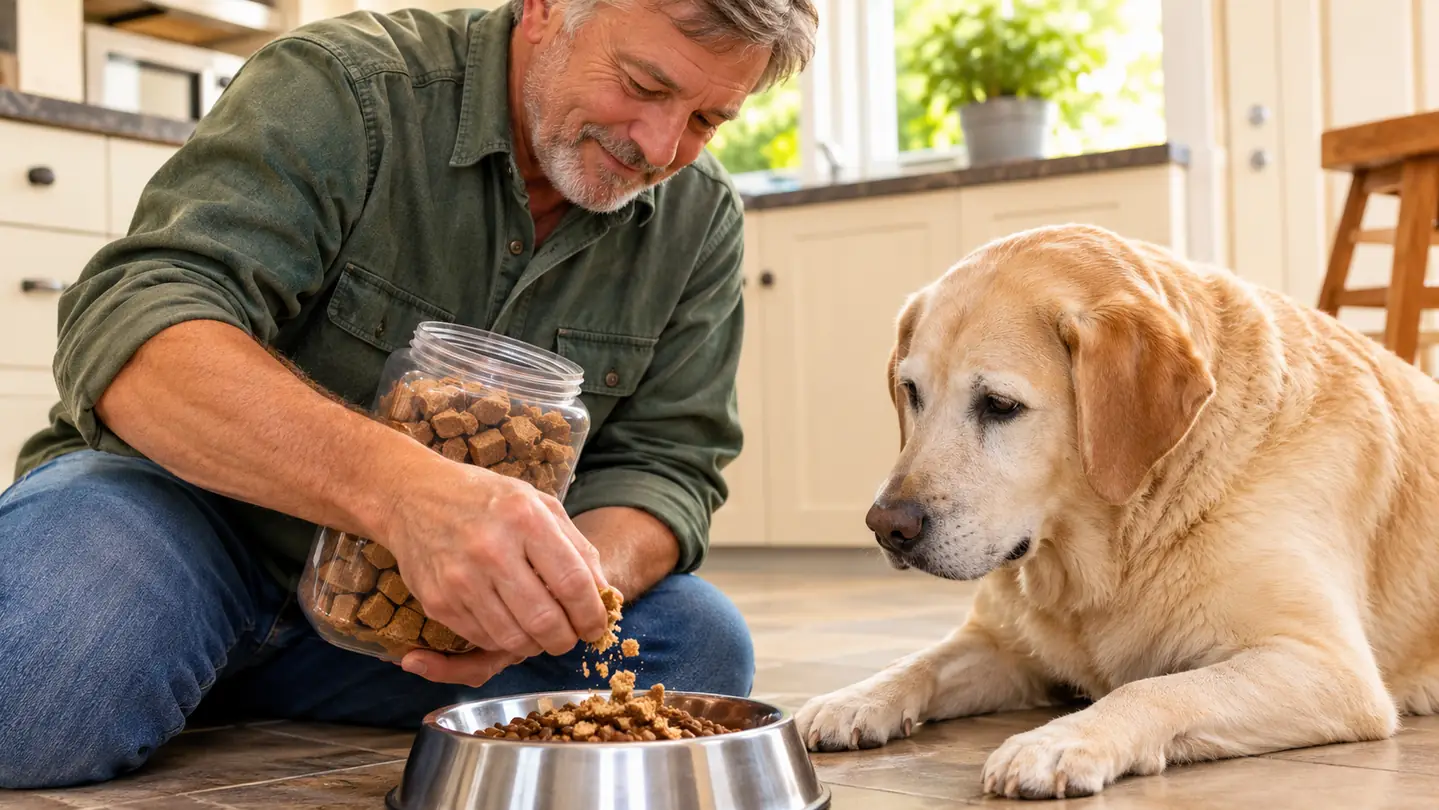
The supplement is one part of the plan, not the whole plan. VetriScience GlycoFlex is a chicken-flavored soft chew, and it is the one Juno has been on for the last few months. Each chew includes 1000 mg of glucosamine HCl and 1000 mg of MSM, along with green-lipped mussel, and the label lists hip and leg strength, joint health, and mobility support as the benefits. I am the sort of person who reads the fine print on everything, so I looked at the milligrams before I looked at the flavor. The formula was put together with scientists and veterinarians, and it is certified by the National Animal Supplement Council. That mattered to me because I read labels.
Juno eats it like a treat. On easy days I hand it to her after breakfast. On harder mornings I crumble it over her food so I know she actually ate it. We follow the label for her weight, and we checked with Dr. Patel before we started. I will say the same thing she said: follow the label for your dog's weight and check with your vet. Do not guess.
Here is the honest part. Nothing changed in the first week. I kept watching for a sign that it was working, and for a while I did not see one. The change came gradually, over weeks. Juno started getting up from the kitchen floor more easily in the mornings. The pause at the bottom of the porch steps got shorter. She still hesitated sometimes, but it was a hesitation, not a refusal. Some days she is still stiff, and on those days we do a shorter walk and take the steps slowly. That is the difference I would tell any owner to look for.
Step 4: Keep Her Moving With Short, Regular Walks
Dr. Patel said to keep Juno lean and moving, and I have learned she was right. Most mornings we walk, usually up to about a mile and a half, and slower in winter when the ground is iffy. We do the same loop most days because familiar ground is easier for her to read, and she knows where the soft spots are. The walks are not about distance. They are about keeping her hind legs working, her weight in a good range, and her joints moving through their full range without a big shock.
I also added small things at home. Before we head for the stairs, I let her do a slow sit-to-stand a few times to warm up her back legs. On cold mornings I give her a minute to stretch before we go out. I keep her nails trimmed, because long nails on hardwood are like ice skates. The routine is boring on purpose. Big sudden efforts are harder on stiff joints than steady, gentle use.
If your dog is not walking much yet, start smaller. A few minutes in the yard, then a short block, then two. The goal is consistency, not a personal record. A dog who moves a little every day is a dog who keeps more of her strength, and strength is what gets a big dog up the stairs.
Step 5: Help Her at the Stairs Without Doing It For Her
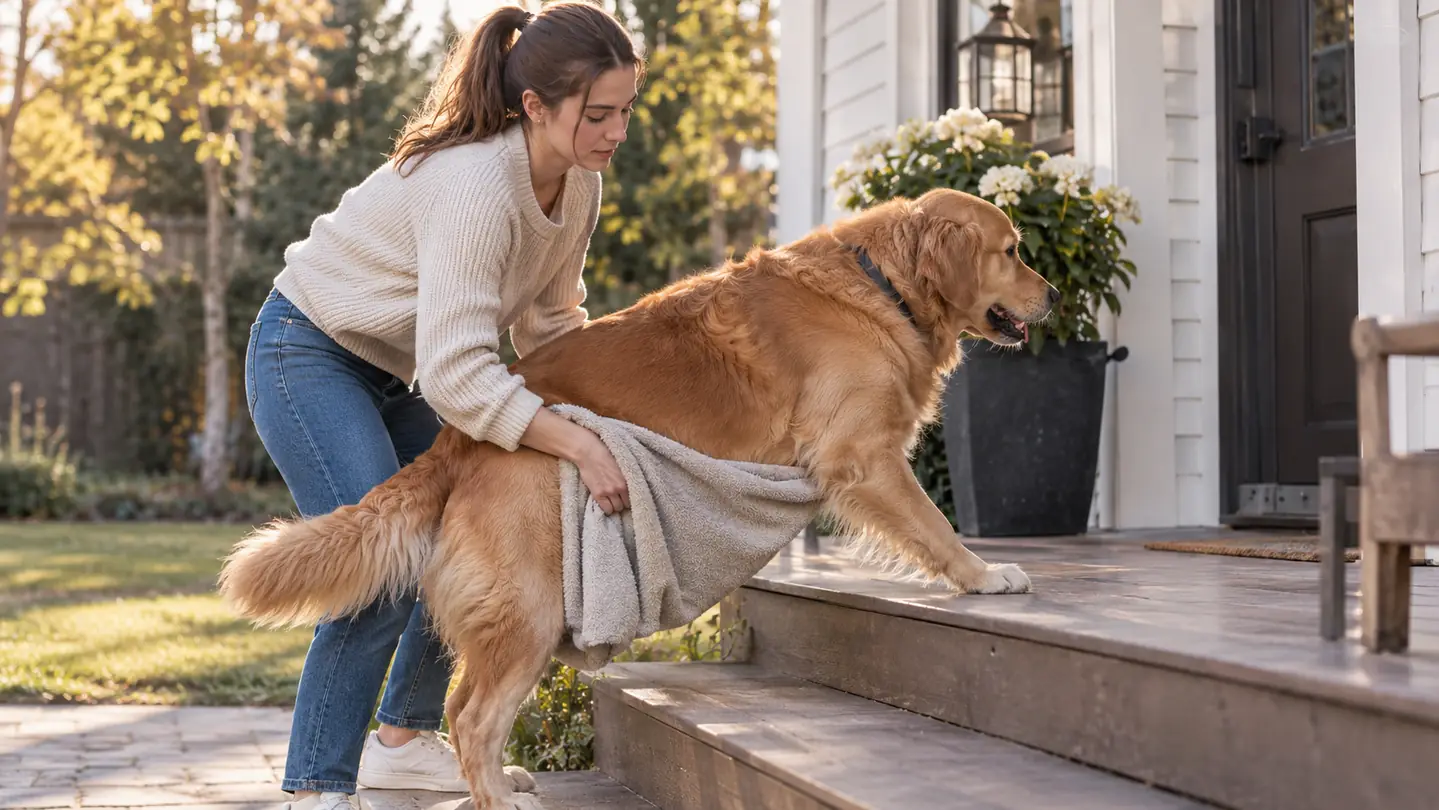
The towel trick is the best thing Dale and I learned, and I wish we had learned it months earlier. Fold a long towel or use a wide cloth sling, and hold it under her belly, just in front of her back legs. You are not lifting her. You are taking a little weight off those back legs so she can do the climbing herself. The sling does not have to be fancy. A bath towel folded lengthwise works, and we keep one by the back door so it is there when we need it. Juno walks up the steps with the sling under her, and she does the work. We just make it possible.
Stand beside her, not in front of her, and let her set the pace. If she needs to stop halfway, she stops. If she needs to back down and try again, she does. I praise her the whole way up, and I do not rush her. Some mornings she takes the steps like she used to, and other mornings she wants the sling the whole way. I let her decide. A 74-pound dog who panics on the stairs is dangerous for everyone, so calm and slow is the whole approach.
And if she is truly stuck, we do not push. There are days when Juno is more tired than others, and on those days we find another way in or we wait. If your dog cannot manage the stairs at all, that is a conversation for your vet, not a reason to carry her. Carrying a big dog is how people get hurt.
What Else Helps
Alongside VetriScience GlycoFlex, Juno gets a pour of omega-3 fish oil on her food every morning. It is not a joint chew, and I do not treat it like one. It supports her skin, coat, and overall comfort, and we have been doing it for about a year now, alongside whichever chew she is on. The oil is unflavored, so she does not mind it, and it pours easily over her breakfast. I always give one joint chew at a time plus the oil, never two chews at once, and I cleared both with Dr. Patel.
The rest is the unglamorous stuff: keeping her weight where the vet wants it, keeping the house safe to move through, and being patient. No single thing fixed the stairs for us. The grip helped, the supplement helped, the walks helped, and the towel helped. Together they added up to a dog who walks up the porch steps instead of sitting at the bottom of them. I also stopped expecting her to be the dog she was at eight. She is eleven now, and eleven looks different.
The change came gradually, over weeks, not days. One morning Juno just walked up the back-porch steps without stopping to think about it first.
If your big dog is hesitating at the stairs, start where we started: ask your vet, fix the footing, start the supplement, keep her moving, and help her at the steps without doing the work for her. That order worked for us. It might not work for every dog, but it is a fair place to begin.
The stairs are not the whole story. They are just where the story shows up every day. If your dog is struggling with them, you already know it, and you already know you want to help. Start small, stay consistent, and give it weeks. That is the honest version of what worked for us.
Give It a Few Weeks and Watch the Steps
VetriScience GlycoFlex is the chicken-flavored soft chew Juno has been on for the last few months, and it is one piece of the stair plan above. It is not a fix for everything, but it supported her hips and legs while we did the rest. Check today's price on Amazon.
Amazon Check Today's Price on Amazon →